Cleaning a medical facility poses various differences and considerations when compared to the cleaning of a conventional workplace, and although every area needs to be clean and presentable, the level of risk varies considerably between an operating theatre and a consultation room, or a waiting area and a staff office. Effective medical facilities cleaning should be based on the purpose and risk level of each space, rather than applying the same routine throughout the building.
The NHS National Standards of Healthcare Cleanliness 2025 require healthcare organisations to assess functional areas according to risk, with monitoring and auditing linked to those classifications. High-risk environments such as operating theatres and intensive care units sit within the highest functional risk category. These spaces naturally demand particularly rigorous cleaning and disinfection procedures.
Elsewhere, consultation rooms and treatment spaces require close attention to surfaces that patients and healthcare workers are regularly in contact with. NHS guidance identifies high-frequency touchpoints such as door hands and taps, and surfaces patients are in contact with such as chair arms and bed rails. These generally need cleaning more frequently than surrounding surfaces.
Waiting rooms and reception areas present different challenges, like the large amount of people that can pass through them each day; this makes seating and communal surfaces important parts of a healthcare centre cleaning programme.
Medical cleaning requires and understanding of infection prevention and cross-contamination; techniques and products need to be appropriate for each environment and cleaning equipment should be managed carefully to prevent the transfer of contaminants from one area to another. Assigning cleaning tasks to existing administrative or clinical employees can be potentially problematic, even when staff are diligent. Their main duties will always be paramount and oftentimes, they won’t have had specialist cleaning training for their facility or be able to navigate the documentation required to demonstrate that work has been completed consistently.
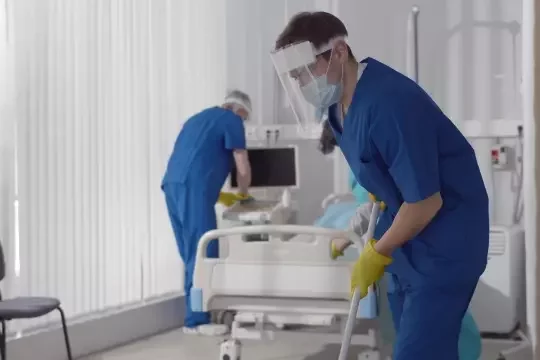
Experienced healthcare cleaning companies can provide trained personnel whose work is structured around how the facility is cleaned. naturaclean, for example, develops site-specific digital cleaning plans and trains operatives on those requirements; completed tasks are recorded through digital job forms, supported by inspections and audits. Our medical cleaning service covers a range of environments and we always tailor to your facility.
For larger premises, working with a seasoned hospital cleaning agency can also remove a considerable burden from healthcare employees. Cleaning is often scheduled around patient care and shift patterns, with dedicated cover working to maintain standards when staffing requirements change. Ultimately, healthcare cleaning requires more than a regular commercial job, as different rooms present different risks, each needing an appropriate cleaning frequency and method. Bringing in trained professionals allows medical facilities to establish a more accountable cleaning programme and allow healthcare staff to concentrate on their important work of caring for patients.